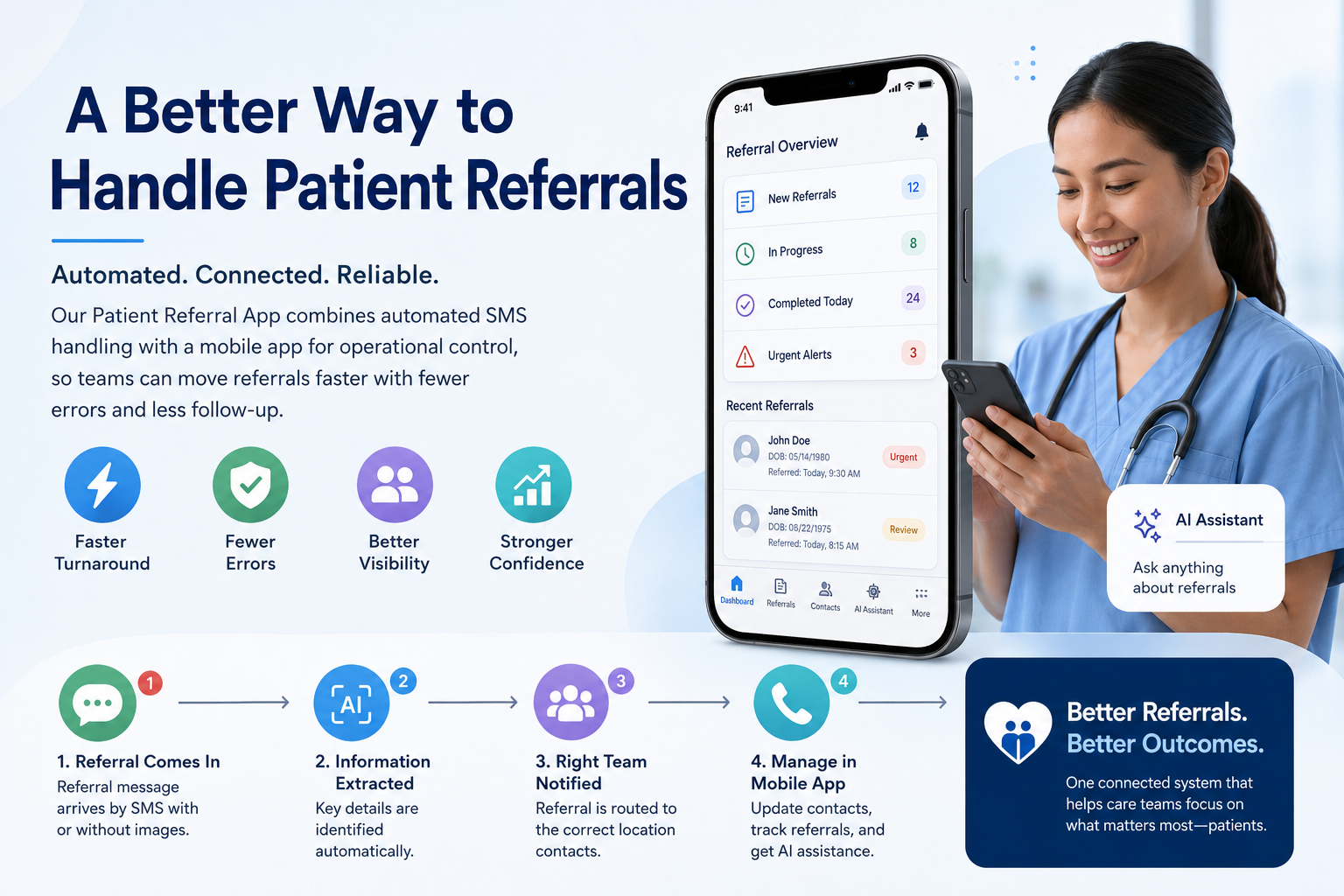
In healthcare, every minute matters. But referral coordination is often slowed down by phone calls, manual notes, and outdated contact lists. Teams work hard, yet the process can still feel fragmented.
Our Patient Referral App was built to solve that problem as one complete system.
It combines automated SMS referral handling with a mobile app for operational control, so teams can move referrals faster, with fewer errors and less follow-up.
The challenge many teams face
Most referral delays are not caused by clinical decisions. They happen because information is spread across too many places.
Common pain points include:
- unclear referral handoffs
- missing or incomplete patient details
- difficulty finding the right contact person
- extra time spent confirming and re-confirming information
These small gaps add up and can delay patient care.
Architecture
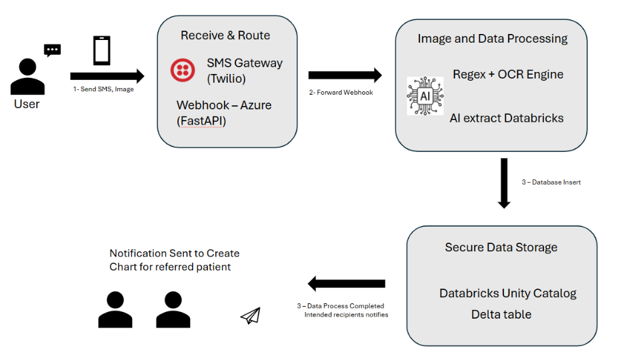
One connected workflow
1. Referral comes in by SMS
When a referral message arrives, the system captures it instantly. If images are attached, it can read text from those images as well.
2. Key information is extracted automatically
The app identifies important details such as patient information and potential urgent concerns, then prepares a clean referral summary.
3. The right destination team is notified
The referral is routed to the correct location contacts, helping teams act quickly without manual forwarding.
4. Mobile app keeps operations up to date
Staff can manage location contacts directly in the mobile app, update information when needed, and use the built-in AI assistant for quick referral-related guidance.
Why this works for non-technical users
Teams do not need to learn technical systems. They use familiar actions, and the app handles the complexity behind the scenes.
Benefits include:
- faster referral turnaround
- fewer communication errors
- less administrative overhead
- better visibility for urgent cases
- stronger confidence that referrals reached the correct team
Real impact in day-to-day work
Instead of switching between tools, staff can work from one connected flow.
Referrals are received, processed, and routed with clear feedback when action is needed. Operations teams can keep contact data current in the app, and coordinators can make decisions faster with less back-and-forth.
Final thoughts
The goal is simple: reduce friction in referral coordination so care teams can focus more on patients and less on process.
Our team builds practical healthcare automation tools like this to reduce delays, improve handoffs, and help care teams focus on patients.